
The Rise of Online Investment Scams: A Cautionary Tale
In recent years, the digital landscape of finance has become a breeding ground for fraudulent activities, particularly in the realm of cryptocurrency and online investments. The allure of rapid financial gains is a potent hook for victims, many of whom find themselves ensnared by sophisticated scams. One such unfortunate event has recently come to light involving a 70-year-old Indian chartered accountant, Ashok Vijayvargiya, who fell prey to such a scheme.
The Fraudulent Scheme Unveiled
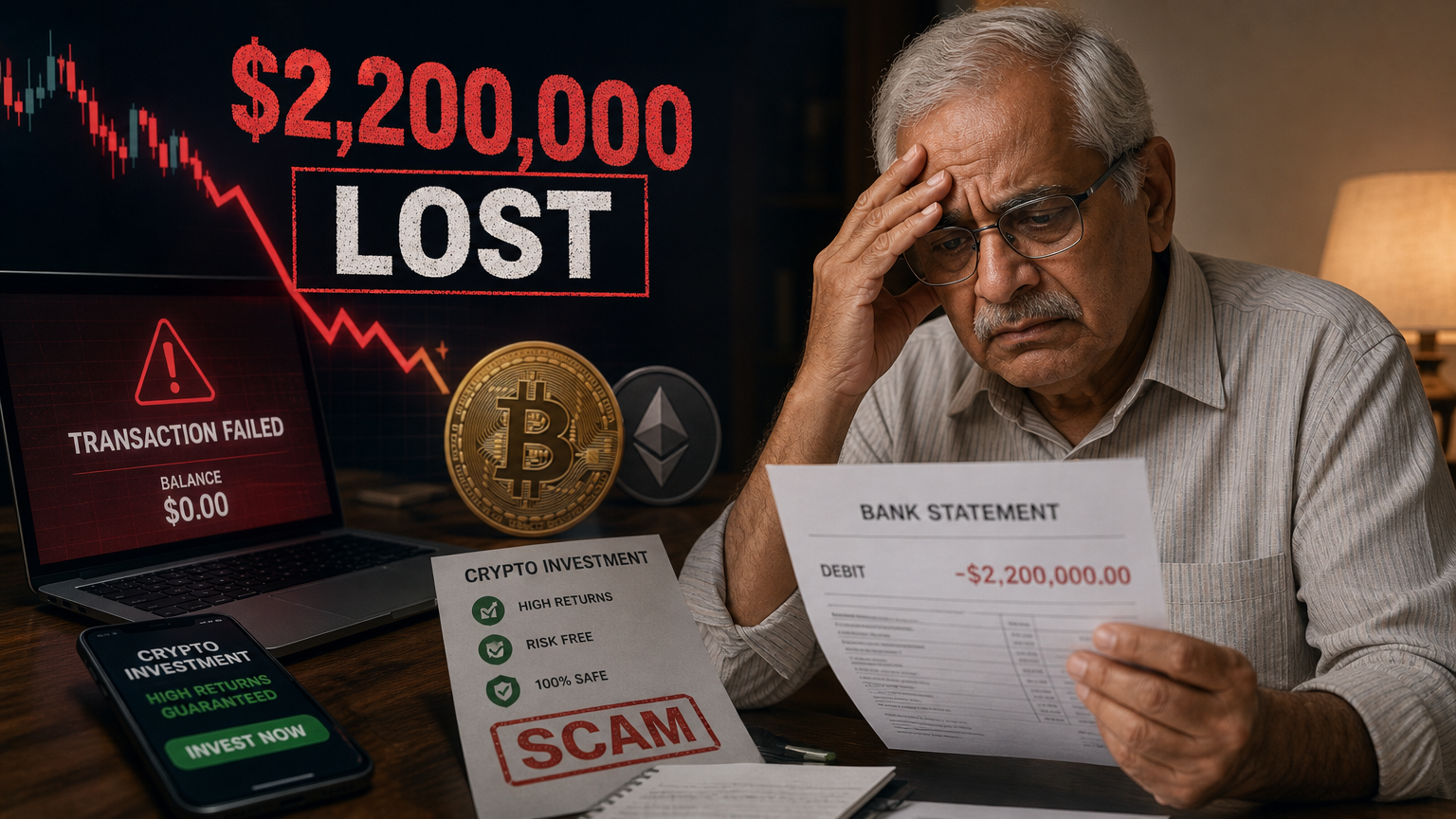
Ashok Vijayvargiya, a senior Chartered Accountant and the Chief Returning Officer of the Madhya Pradesh Chamber of Commerce, found himself at the center of a major online investment scam. It began innocuously enough with a friendly introductory message on social media, "Hello, this is Divya." What followed was a meticulously orchestrated confidence trick, culminating in a colossal financial loss of ₹21.06 crore (approximately $2.2 million).
Vijayvargiya was lured into a fake cryptocurrency trading platform by fraudsters who initially demonstrated seemingly genuine, albeit fabricated, returns on investments. Seeing these apparent gains, the victim continued investing, increasing his contributions until the total sum exceeded $2.2 million. However, the profits were illusory, as he later discovered when attempts to withdraw his investments were met with endless excuses and delays from the fraudulent operators.
The Digital Trail and Law Enforcement Actions
The sophisticated nature of this scam did not go unnoticed by the authorities. The State Cyber Cell of Madhya Pradesh has launched an investigation into the case, filed against unnamed suspects. Sanjeev Nayan Sharma, the DSP leading the investigation, reported that efforts are underway to trace 20 bank accounts, three WhatsApp numbers, and the fraudulent trading platform's URL. These efforts are crucial to following the digital trail and potentially freezing the associated accounts to prevent further fraudulent activities.
Recurrent Patterns Across Indian States
Regrettably, Vijayvargiya's case is not isolated. The blueprint of these scams is replicated across various Indian states. In a parallel case, Divyesh Patel, a 29-year-old software engineer from Surat, Gujarat, was apprehended by the City Cyber Crime Cell for his involvement in a similar scheme. A complainant in this case was defrauded of ₹72.73 lakh (~$76,000) under the guise of cryptocurrency trading via the messaging platform Telegram. As with the Vijayvargiya case, the victim's funds were siphoned off into a network of accounts, with ₹17 lakh (~$17,700) being traced to Patel's bank account.
This account has surfaced in multiple cyber fraud investigations across different states, with the total alleged fraud amounting to ₹24.72 crore (~$2.5 million). Legal charges against Patel include violations under Section 66(D) of the Information Technology (Amendment) Act, 2008, and relevant sections of the Bharatiya Nyaya Sanhita, 2023.
The Global Perspective on Cryptocurrency Scams
On a broader scale, such scams are not confined to India. The global cryptocurrency landscape has witnessed similar fraudulent activities. For instance, the FBI documented $11.4 billion in cryptocurrency losses in the United States in 2025, reflecting a 22% increase from the previous year. This highlights the pervasive and expanding nature of digital financial scams worldwide.
In another significant incident, the Enforcement Directorate arrested Bengaluru-based hacker Srikrishna, alias Sriki, linked to a Bitcoin theft case valued at approximately ₹11.5 crore (~$1.3 million). These cases underscore the complexity and breadth of cybercrime, pushing law enforcement agencies worldwide to adapt and respond with increased vigilance.
Preventative Measures and Public Awareness
The string of incidents has prompted proactive measures and warnings from cybercrime divisions, such as the Surat Cyber Crime Cell. Vigilance and skepticism are advised when encountering unsolicited offers related to cryptocurrency, stock trading, or forex. Specific recommendations include disengaging from and blocking unknown Telegram or WhatsApp groups and recognizing that modest early returns are often used as bait by fraudsters.
Additionally, suspected fraud should be promptly reported to cybercrime helplines. There is a strong advisory against transferring money to individuals met via social media or matrimonial sites without thorough verification. This counsel aims to protect potential victims and curtail the rampant spread of online investment scams, emphasizing the need for constant education and awareness in navigating the digital financial landscape.